
Last updated November 16, 2026
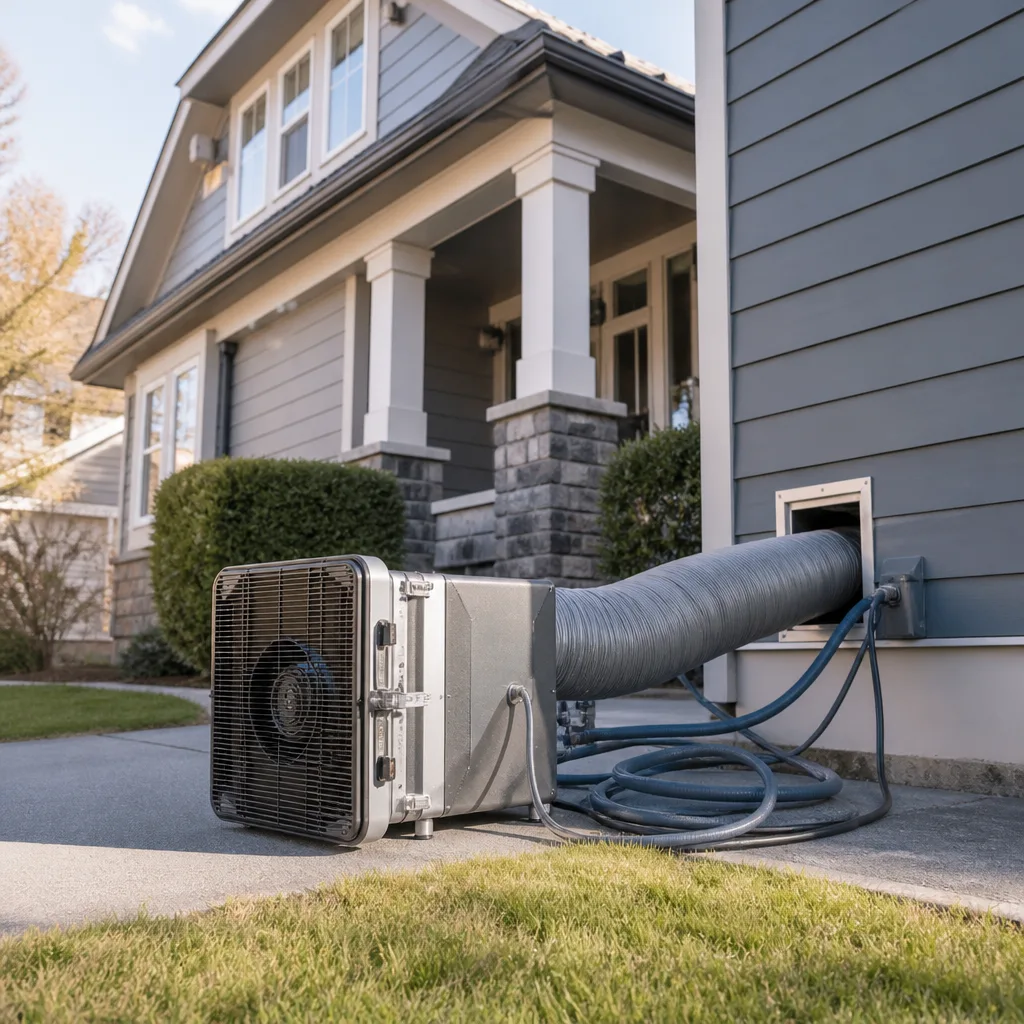 Whole-home duct cleaning
 Dryer vent cleaning
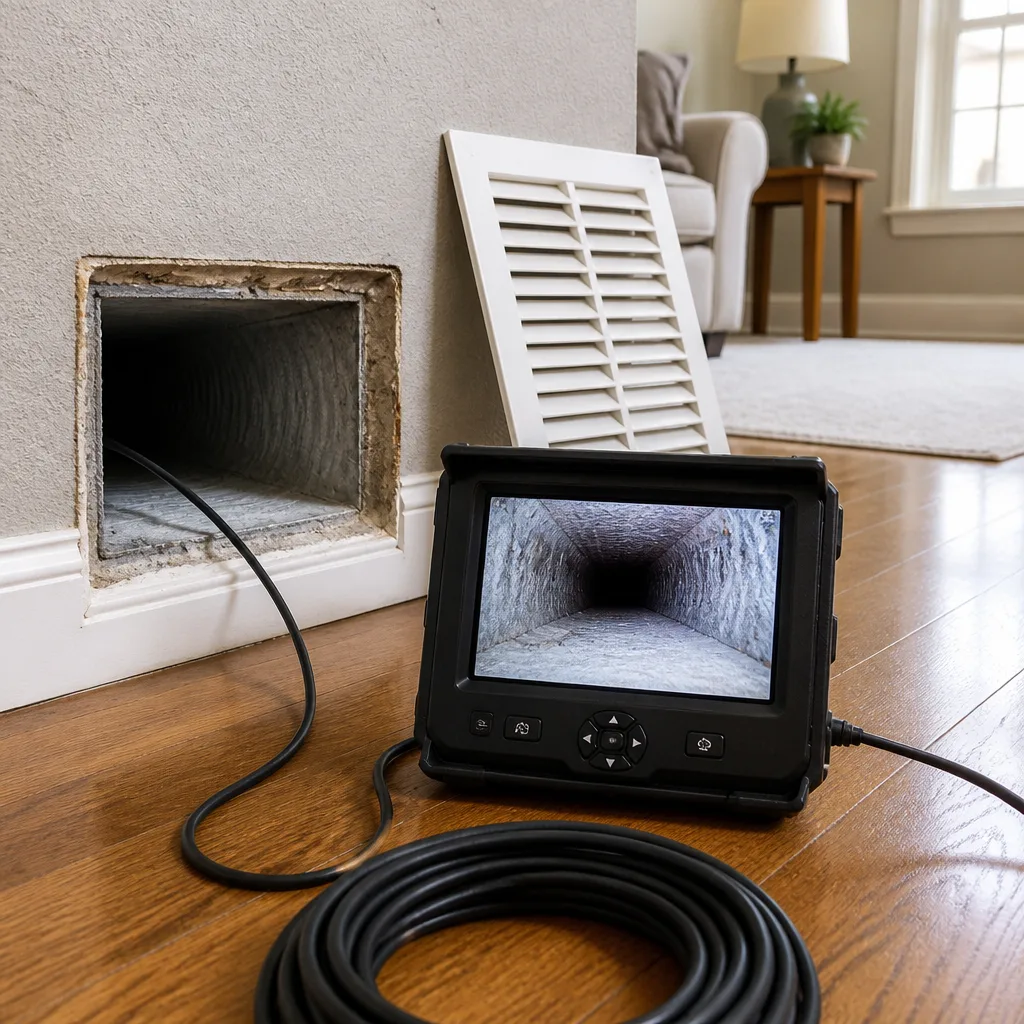 Camera inspection
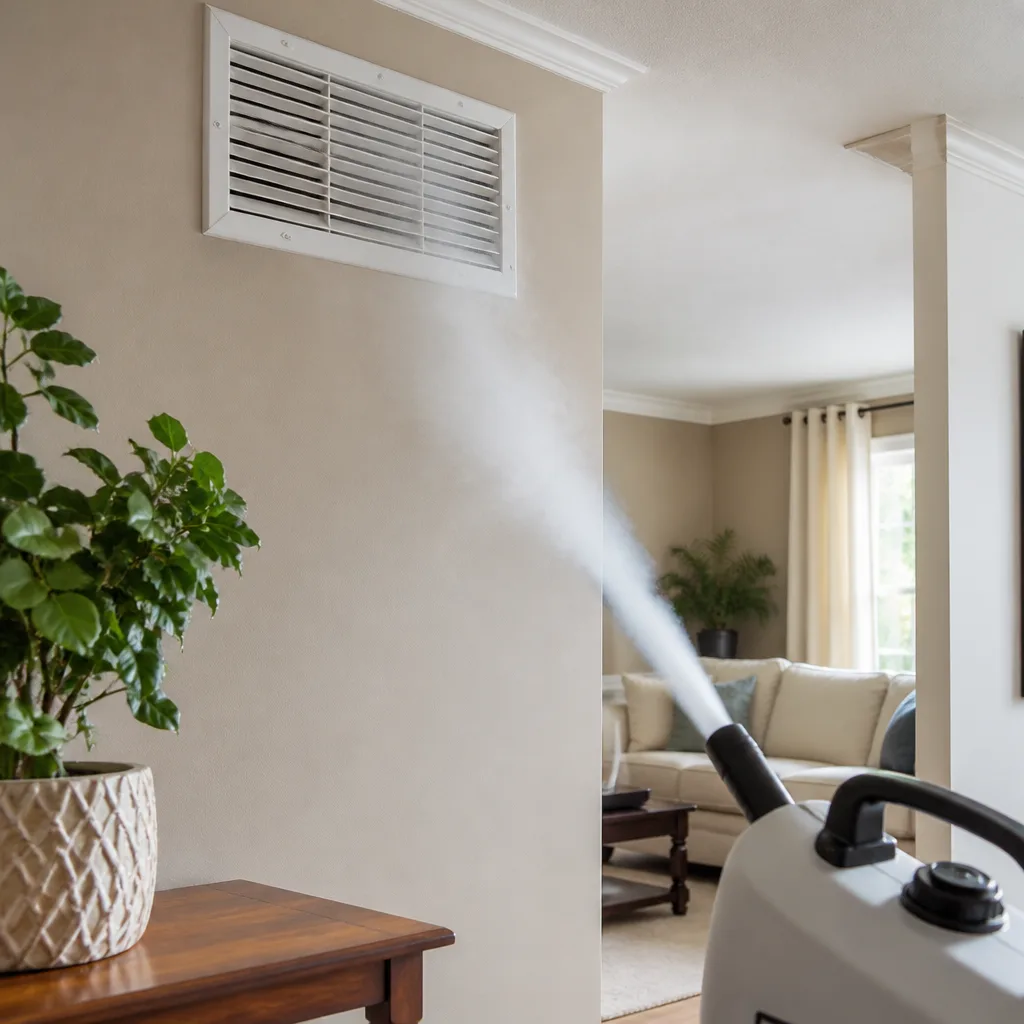 Sanitizing & deodorizing
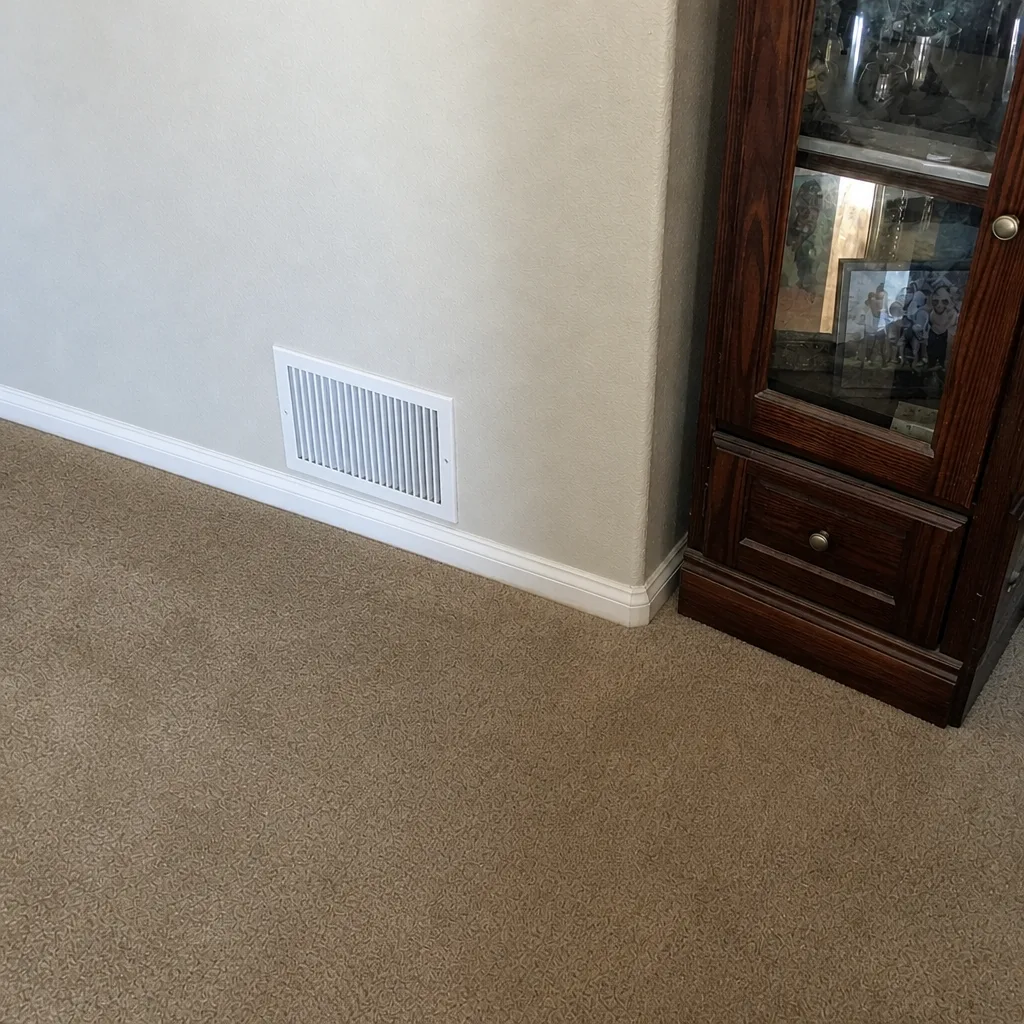
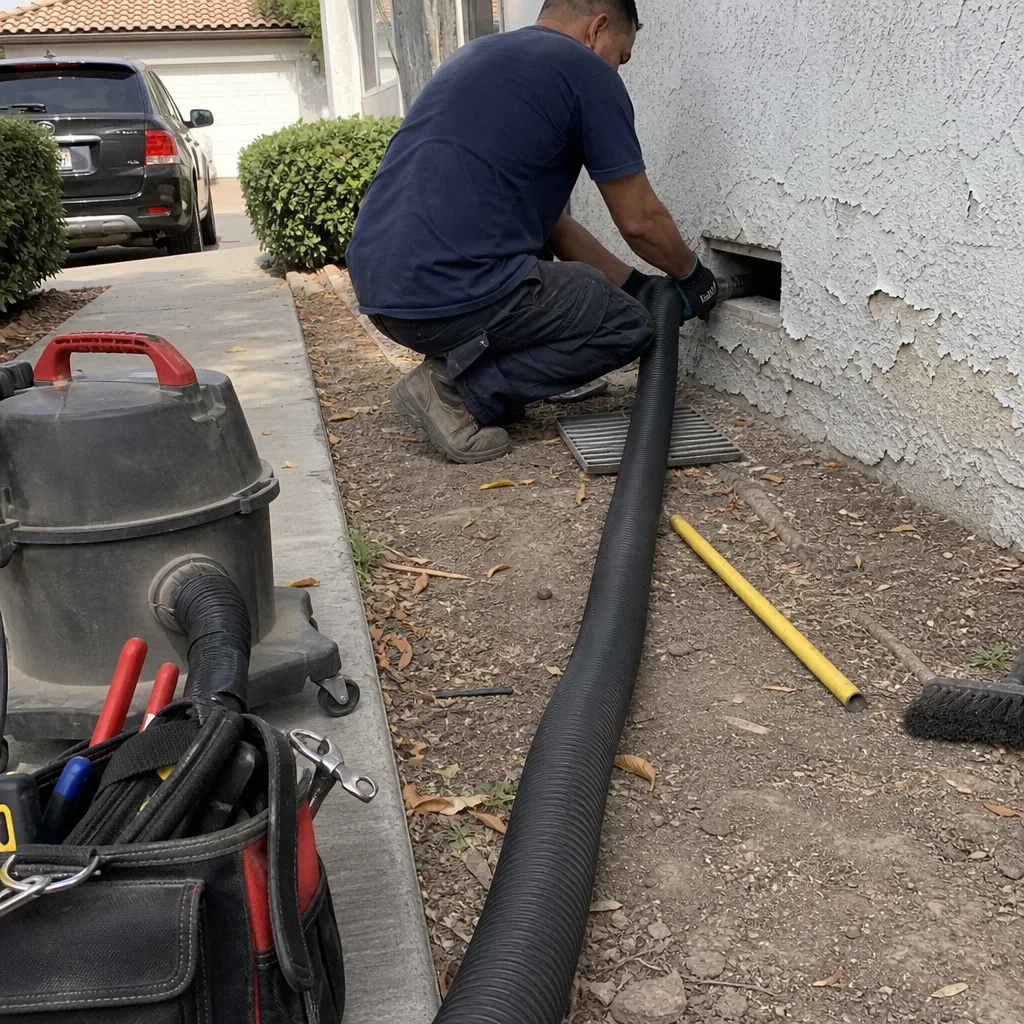
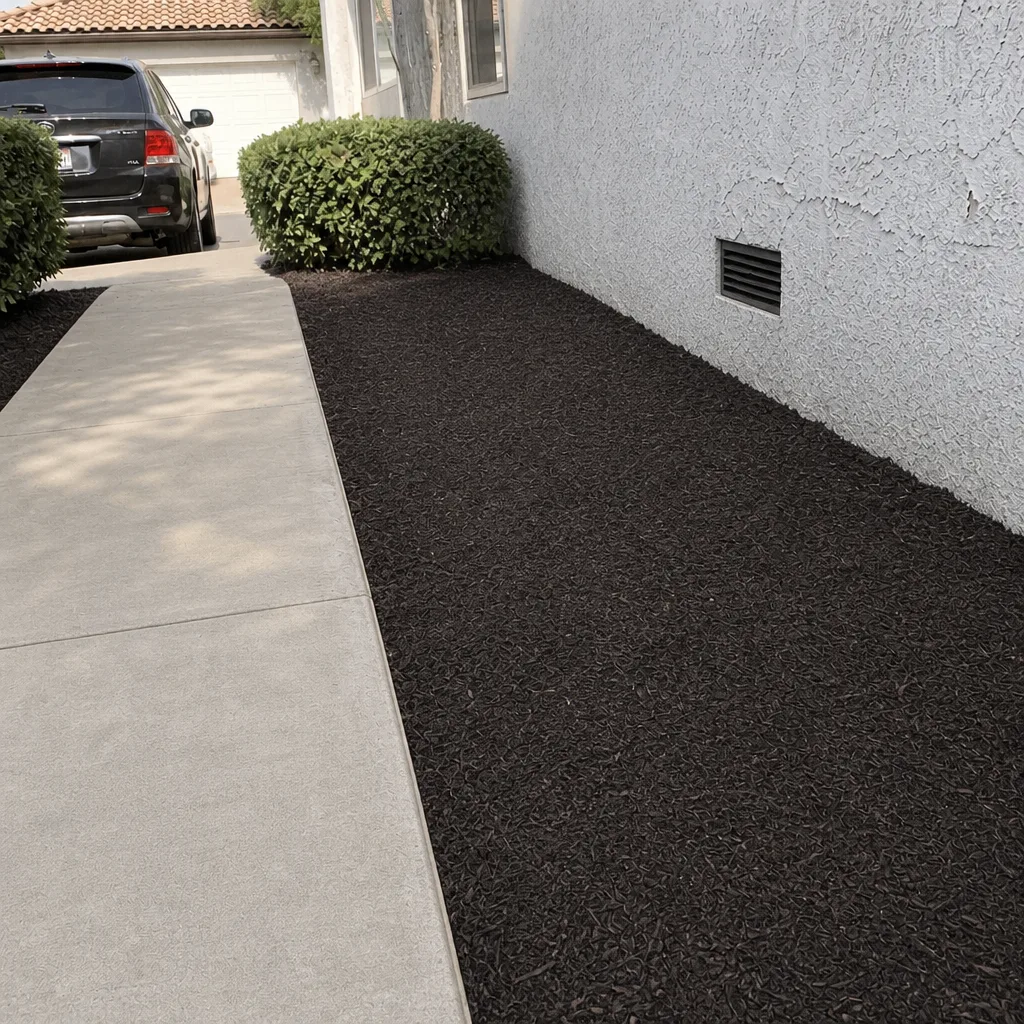
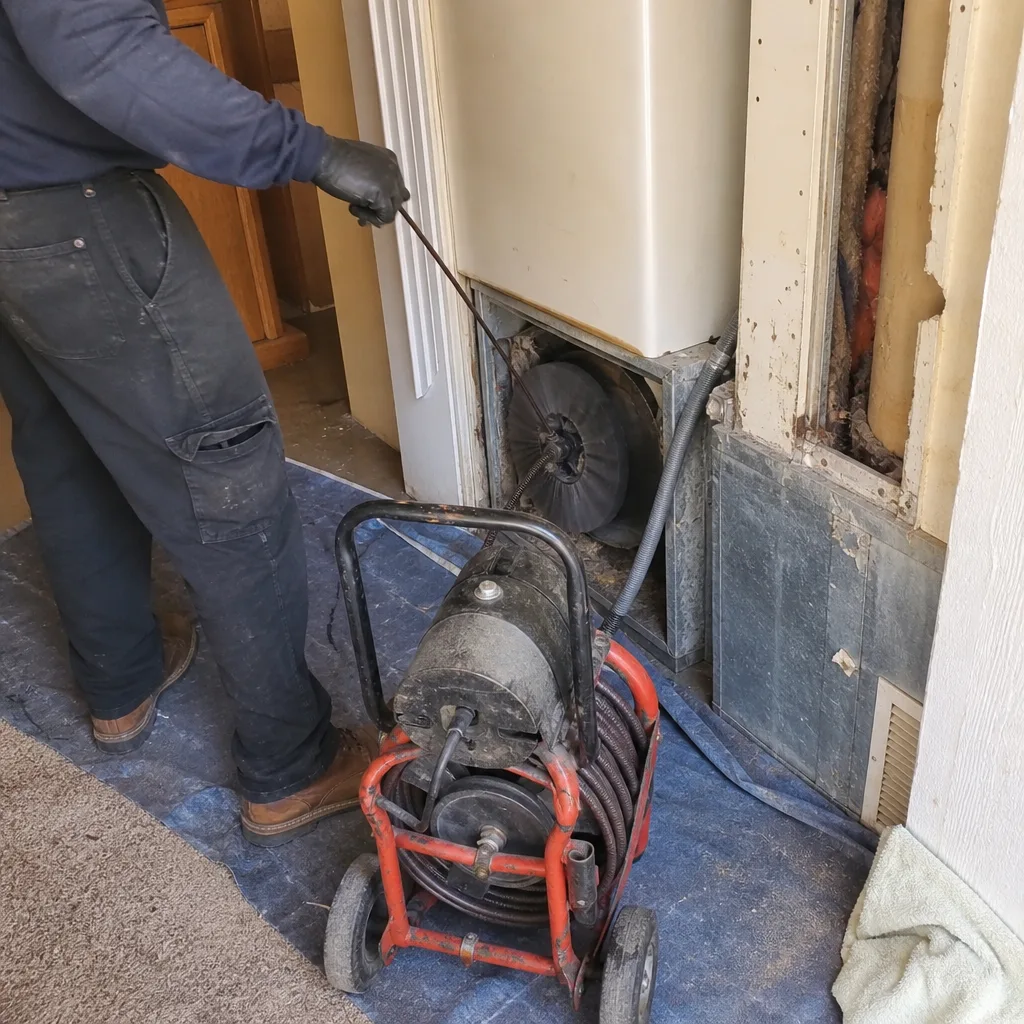
Whole-system duct and dryer vent check with before-and-after photos - you see exactly what came out of your vents
That "$99 whole-house special" is a bait ad - the real number appears once they are in your hallway, or the "clean" is a shop-vac at the register. We photograph the inside of your ducts before and after instead.
How to Hire an Air Duct Cleaning Contractor in Bakersfield: A Step-by-Step Guide
Most people hire a duct cleaner the same way they’d pick a restaurant: the first quote that looks reasonable, or the flyer with the big price on it. That’s backwards. Duct cleaning is one of the few home services where the cheapest advertised price and the final invoice can be thousands of dollars apart, and where the work happens in spaces you’ll never see. In Bakersfield, that gap matters more than usual, because our long dusty summers push a lot of particulate through return grilles, and a house with allergies or a shedding dog feels the difference fast. This guide gives you the questions, the contract terms, and the walk-through habits that separate a real full-system contractor from a van with a vacuum and a script.
Quick Answer
To hire an air duct cleaning contractor in Bakersfield, verify three things before you book: the equipment they’ll actually use (a negative air machine with real CFM output, a proper brush or air-whip system, and HEPA filtration on the exhaust), a written quote with line items rather than a single teaser number, and a walk-through of your system done before any cleaning starts. Then get one flat price for the whole system agreed in writing. If a company can’t answer the equipment questions or skips the walk-through, keep looking.
Styles & brands we work with
- Whole-home duct cleaning
- Dryer vent cleaning
- Camera inspection
- Sanitizing & deodorizing
Table of Contents
- The Five Equipment Questions to Ask Before You Book
- How to Read a Duct Cleaning Quote
- Why NADCA Membership Is a Starting Point, Not a Guarantee
- Red Flags Specific to the Bakersfield Market
- What a Legitimate Walk-Through Looks Like
- Why Repair Belongs in the Conversation
- The Dryer Vent Question Most Homeowners Forget
- Common Mistakes to Avoid
- When to Call a Professional
- Frequently Asked Questions
The Five Equipment Questions to Ask Before You Book
Equipment is where the gap between a real duct cleaning and a lookalike opens up. You don’t need to become a duct technician to sort this out. You need five questions, asked on the phone, with the answers written down. A legitimate contractor answers them in plain terms. A low-bid operator gets vague, changes the subject to price, or promises to “explain it on the day.”
- What’s the CFM rating on your negative air machine? CFM means cubic feet per minute, and it’s the measure of how much air the machine can pull out of your system while it works. A machine that moves too little air can’t hold the dust it disturbs. Ask for the number, not the brand alone.
- What brush or agitation system do you use? Source removal, the standard the industry is built on, means physically loosening debris off duct walls and then capturing it. Brushes, air whips, and specialized rotary tools all do that job. A shop vacuum with a hose does not.
- Is there HEPA filtration on the exhaust? This is the part people skip, and it’s the one that protects your house. Air pulled out of the ducts has to be filtered before it goes back into the room, or you’ve just rearranged the problem. We use Abatement Technologies filtration on jobs because containment-level particulate control is the standard in professional remediation work.
- What equipment brand are you running? Specific names tell you something. Professional-grade systems from Rotobrush and Nikro are built for duct interiors; consumer-grade vacuums are not. A contractor who can name their equipment and explain why they chose it usually knows their trade.
- Do you clean the whole system, or just the accessible runs? Whole-system means supply and return, trunk lines, plenum, registers, and the air handler area, not one visible run near the furnace.
If you take nothing else from this section, take the exhaust filtration question. It’s the one most homeowners never think to ask, and it’s the one that tells you whether the company thinks in systems or in visits.
How to Read a Duct Cleaning Quote
A quote you can trust names what’s included and what isn’t, and it puts one price on the whole system. A quote you can’t trust is a single number near a coupon, with the scope left to the day of the visit. The difference isn’t the dollar amount. It’s the structure.
Here’s what a written quote should always contain:
- Scope line items. Supply and return cleaning, register and grille cleaning, the air handler area, and any treatment or repair as separate lines.
- One flat price for the system. Not a per-vent price, not a base price plus per-register add-ons. Per-vent pricing is the bait-and-switch setup in disguise, because the vent count always grows once the technician is inside.
- Equipment named. The machines and filtration they intend to bring.
- What’s excluded. Duct replacement, asbestos-containing materials, or inaccessible sections should be flagged up front, not discovered later.
- The estimate is the price. The written estimate sets the final number. Anything that changes it should require your agreement first.
Vague language is the tell. “Standard cleaning,” “as needed,” “starting at,” and “additional work may apply” all mean the price is open. A contractor who is serious about a flat price puts the scope down in writing, because it protects them too.
What about before-and-after photos?
Ask for them before you book, not after. Photos of your own ducts, taken at the start and again at the finish, are the simplest proof that the work happened where you couldn’t watch. A contractor who does this routinely won’t hesitate. One who doesn’t will tell you it’s not standard.
Why NADCA Membership Is a Starting Point, Not a Guarantee
NADCA, the National Air Duct Cleaners Association, publishes the industry’s assessment and cleaning standards, and membership is a reasonable first filter. It is not a finish line. Membership is a dues-and-standards matter, and a company can hold it while still running a thin operation. Verification beyond the certificate is what matters.
Here’s what to check once the membership box is ticked:
- Does the crew follow the assessment standard? That means a walk-through and a documented look at the system before cleaning, not a quote over the phone and a machine on the porch ten minutes after arrival.
- Are they equipped for repair? Most duct cleaners clean. Fewer can find and correct a breach in the system. A separated joint or a crushed flex run quietly erases the value of any cleaning, because unfiltered air keeps entering downstream of the work. Morningstar treats air duct repair as its own service for exactly this reason.
- Can they work on your IAQ equipment without breaking it? If your home has a Honeywell or Aprilaire system, the technician should understand how it fits into the duct network. Whole-home IAQ is a system, and cleaning around a humidifier or filtration unit requires knowing what it is.
- Is the scope written, or verbal? Standards matter less than whether the company applies them to your job in writing.
Certification gets a company to the table. The walk-through, the written scope, and the equipment list tell you whether they belong there.
Red Flags Specific to the Bakersfield Market
Bakersfield has a pattern that shows up in a lot of service categories, and duct cleaning is no exception: out-of-area companies run discount blitzes through this market, work a neighborhood hard for a few weeks, and move on. When the invoice dispute happens, they’re already three counties away. Knowing the local shape of the problem is half the defense.
- Unmarked vans and no verifiable address. A legitimate local operator can tell you where their business is and answer questions about the area. If the only contact is a phone number and a website, ask why.
- A price that’s dramatically below everyone else’s. A very low advertised number isn’t a deal, it’s an entry point. The real price arrives after the technician “finds” something.
- Pressure to decide on the spot. “This price is only good today” is a sales tactic, not a scheduling fact. A real quote survives a night’s sleep.
- Mold discovered within minutes. Mold claims are the classic upsell. Ask what testing supports the finding, and get it in writing with photos.
- No photos, no documentation, and a very short visit. A genuine whole-system clean takes real time. In-and-out in under an hour for a full house should raise a question.
- Per-vent pricing that grows. The quote was for ten vents. Somehow your house has eighteen.
Bakersfield’s housing stock ranges from older homes near downtown to newer construction in the northwest, and duct systems vary a lot across that range. A contractor who knows the area will ask about the house’s age and layout, not just the square footage. If you want to understand what a proper air duct cleaning visit should look like here, that’s a fair question to put to anyone you’re considering.
What a Legitimate Walk-Through Looks Like
The walk-through is the moment the whole relationship is decided, and it’s the step low-bid operators skip because it costs them time and exposes the scope. A proper assessment happens before any equipment comes in the door. It’s not a sales visit. It’s a look at your actual system.
Here’s what it should involve:
- A look at the air handler and the plenum. The technician checks the furnace or air handler area, the filter, and where the ductwork connects.
- Access point planning. Real cleaning requires access into the duct runs. The technician should identify where those points will go and confirm you’re fine with them before cutting anything.
- A register count and a visual check. Every supply and return should be accounted for, and any crushed flex, separated joint, or disconnected run noted.
- A conversation about the house. Pets, allergies, recent renovation, and how long since the last cleaning all shape what the job needs.
- A written scope and flat price. Delivered after the assessment, not before it.
If a contractor quotes you firmly over the phone without seeing the system, that price is a guess or a hook. Either way, it isn’t a commitment you can hold them to. The walk-through is what makes the flat price real.
Why Repair Belongs in the Conversation
Cleaning a duct system with a breach in it is like mopping a floor with the window open in a dust storm. Air finds the path of least resistance, and if a joint is separated or a run is crushed somewhere in the attic or crawlspace, unfiltered air keeps entering the system downstream of everything you just cleaned. The house gets dusty again and nobody can explain why.
This is why we ask about repair capability during the assessment rather than after. Our technicians have up to experience, and part of that experience is knowing where duct systems fail in this climate and this housing stock. When we find a breach, we document it with photos and put the repair in the scope. A contractor who only cleans will either miss the problem or mention it as a reason to come back.
Ask any company you interview: can you identify and fix a disconnected or damaged duct run, or do you only clean? The answer tells you how they think about the system.
The Dryer Vent Question Most Homeowners Forget
Lint is fuel. It accumulates in the dryer vent line, and a clogged vent line is a genuine fire hazard, not a maintenance nuisance. This is the one part of the hiring conversation where the stakes are safety rather than air quality, and it’s routinely tacked onto a duct job as an afterthought or a discounted add-on.
Treat it as its own service with its own standards. A proper dryer vent cleaning involves the full run from the dryer connection to the exterior termination, not just the section you can reach from the laundry room. The technician should confirm the exterior vent flap opens and closes properly, check for crushed or kinked flexible line behind the dryer, and remove the lint that builds up at the termination point. If your dryer takes two cycles to dry a load, that’s a signal worth acting on.
When you’re interviewing a duct contractor, ask how they handle dryer vents. A company that treats it as a serious fire-risk service will explain the run, the termination, and what they check. One that treats it as an upsell will quote you a number and move on.
Common Mistakes to Avoid
- Booking on price alone. The lowest number on a flyer is an opening bid, not a price. Compare scope and equipment, not just the figure.
- Not asking about exhaust filtration. HEPA filtration on the negative air machine is what keeps the dust out of your living space. Skip the question and you may get a machine that just moves it around.
- Accepting a phone quote as final. A firm price without a walk-through is a guess. Insist on an assessment first.
- Letting the technician “find” problems without documentation. Mold claims, damaged ducts, and extra work should all come with photos and a written scope before you agree.
- Ignoring the dryer vent. Homeowners in Bakersfield focus on the ductwork and forget the vent line, which is the part with the actual fire risk.
- Hiring an out-of-area blitz operation. Ask where the business is and whether they can be reached after the job. Local accountability matters when something needs a second look.
- Skipping the before-and-after photos. They’re the simplest proof of work done and the easiest thing to forget to ask for.
When to Call a Professional
Not every dusty house needs a duct cleaning, and an honest contractor will tell you so. But some situations call for a professional assessment rather than a wait-and-see. If anyone in the home has allergies or asthma that worsen indoors, if you’ve recently finished a renovation that generated fine dust, if you have pets and the return grilles clog faster than the filter, or if you notice visible debris or a musty smell at the registers, it’s time to have the system looked at. A disconnected or crushed duct run is another reason, and one that cleaning alone won’t solve.
Morningstar Air Duct Cleaning offers free estimates in Bakersfield. Call (866) 942-8025. We answer 24/7. Fast dispatch from 7am to 7pm, Sunday through Friday. Our technicians have up to experience, and we use professional-grade Rotobrush and Nikro equipment with Abatement Technologies filtration on every job.
Frequently Asked Questions
Pricing depends on the size and layout of the system, the number of runs, and whether repair or treatment is needed, so we quote per job from a written estimate after a walk-through. We don’t quote per vent and we don’t advertise teaser prices, because both are how the bait-and-switch model works. The estimate is free, and the written estimate sets the final price. Call (866) 942-8025 for an exact quote.
Because the advertised number isn’t the price; it’s the entry point. The low figure gets a technician in the door, and the real invoice grows once “mold” or “extra vents” are discovered on site. A flat price for the whole system, agreed in writing before work starts, is the only number you can actually compare. Call (866) 942-8025 and we’ll walk you through what’s included.
We recommend it, at least for the walk-through and the final review. Being present for the assessment lets you ask about access points and see the before-and-after photos of your own ducts at the finish. It also means you can confirm the scope matches what was quoted before the technician packs up.
Ask for before-and-after photos of your own system, not stock images. A legitimate contractor documents the ducts at the start and again when the job is complete, and will walk you through what changed. If a company can’t show you photos of your system, you have no way to verify anything.
There’s no universal schedule. Homes with pets, allergy sufferers, recent renovation, or heavy dust loads need it more often than a clean household with no pets. A visual check of the return grilles and the air handler area is a reasonable starting point. If the system hasn’t been assessed in several years, a walk-through will tell you more than a calendar will.
Yes. Both are part of the same home air and fire-safety picture, and we scope them together when it makes sense. The dryer vent gets its own attention because it’s a fire hazard rather than an air quality issue. Call (866) 942-8025 and we’ll give you a flat price for both.
The Bottom Line
Hiring a duct cleaner in Bakersfield comes down to a few checks that take ten minutes on the phone. Ask about the negative air machine’s CFM, the brush or agitation system, and the HEPA filtration on the exhaust. Insist on a walk-through before the quote becomes firm. Get one flat price for the whole system in writing, with the scope spelled out. Confirm they can find and fix a breach, not just clean around it. And remember the dryer vent. A contractor who answers all of that clearly is worth the wait. We’re glad to be one of the options you consider, and we’ll always tell you what we’d do in your position rather than what’s easiest to sell.
If you want a straight answer about your system, call (866) 942-8025 for a free estimate. You can also start with Morningstar Air Duct Cleaning or read more about our Bakersfield service area.
Written by the team at Morningstar Air Duct Cleaning.
See the difference
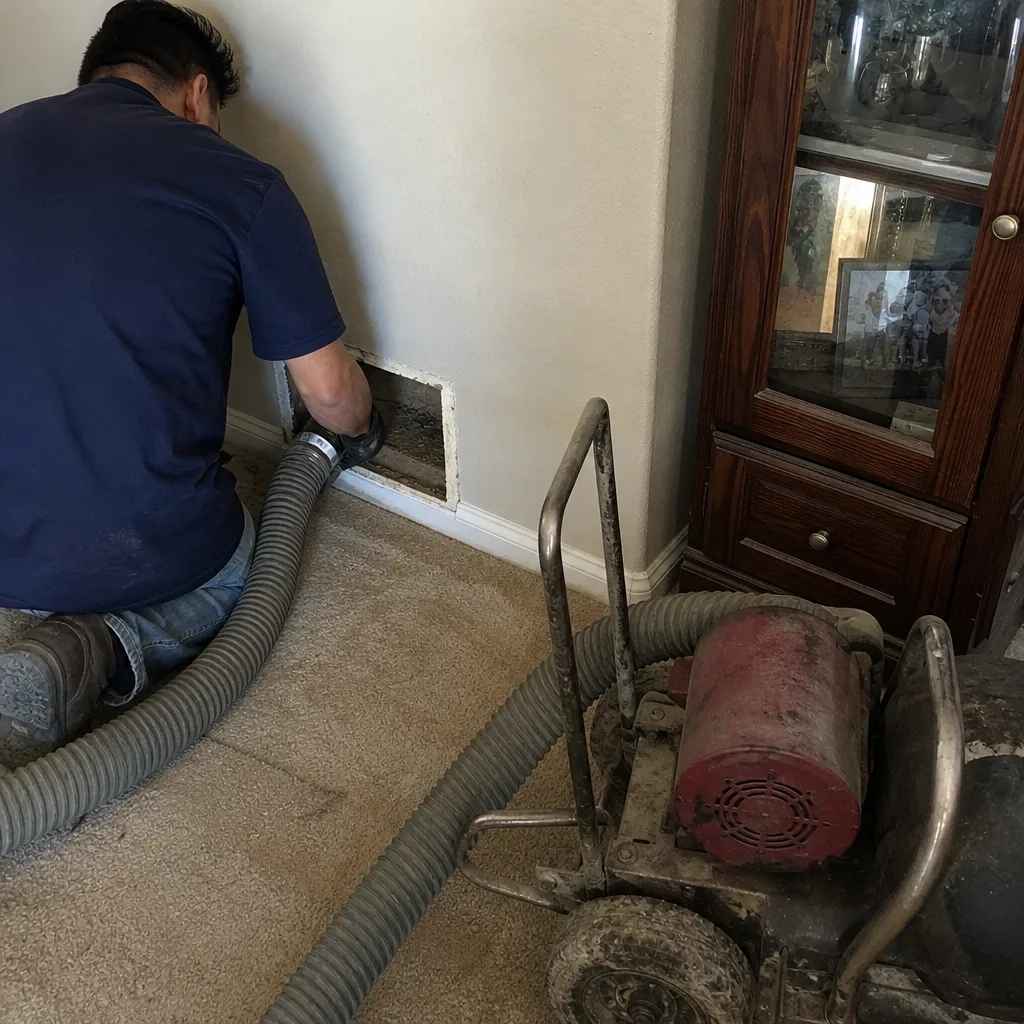 Before
 After
 Before
 After
 Before
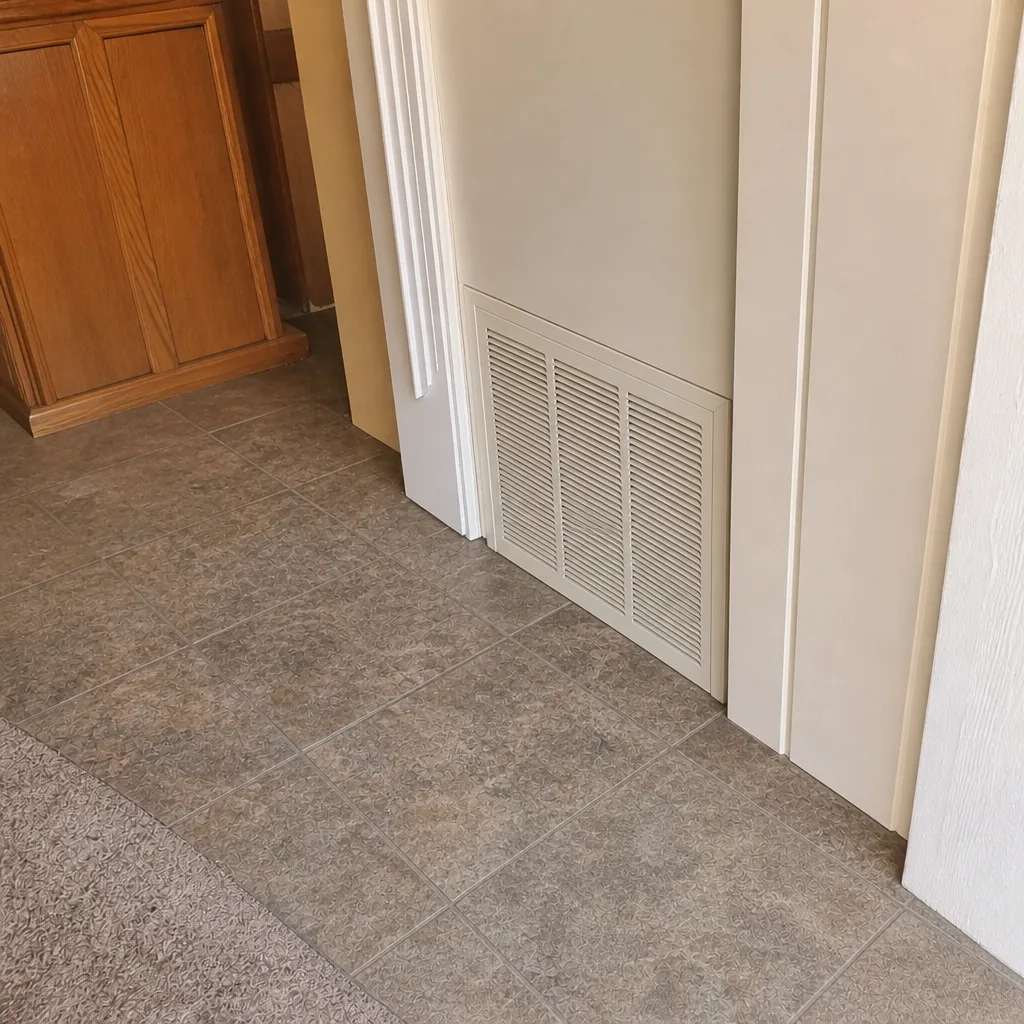 After