
Last updated November 16, 2026
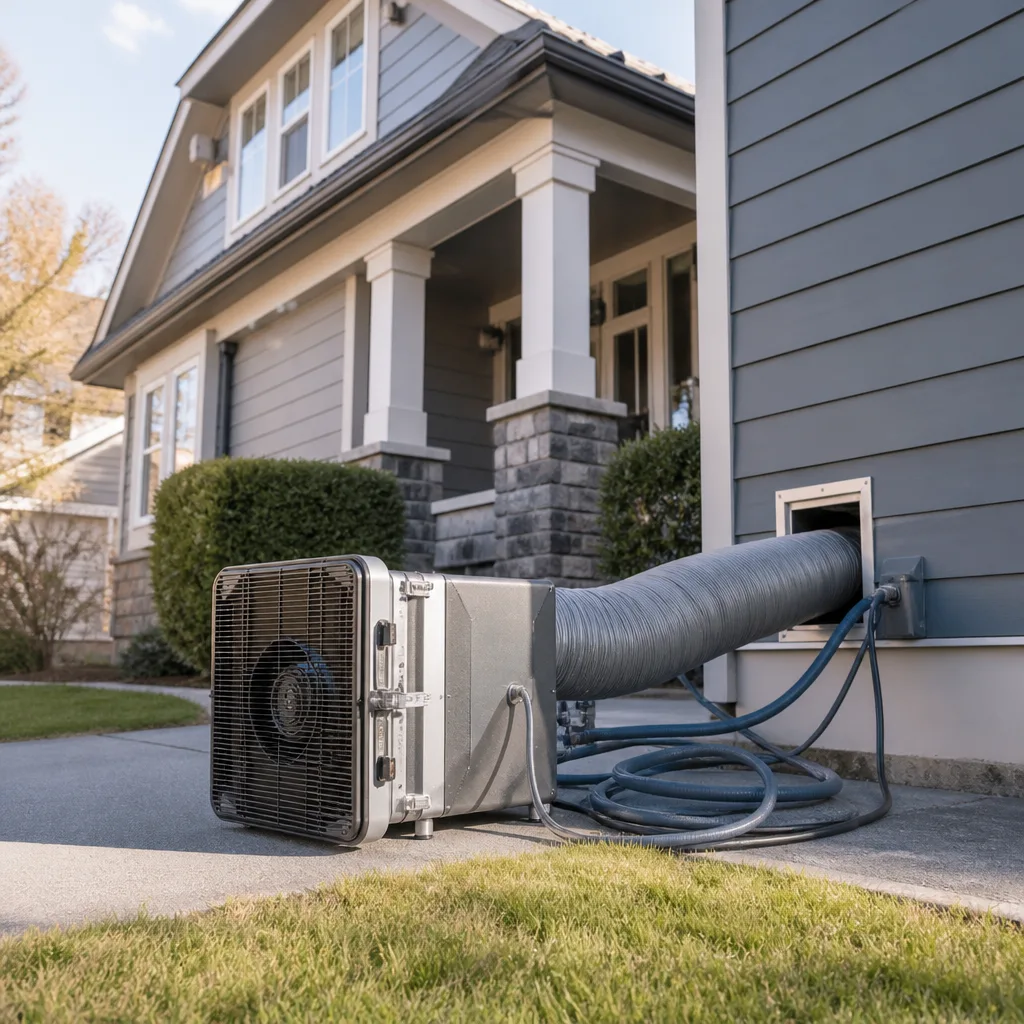 Whole-home duct cleaning
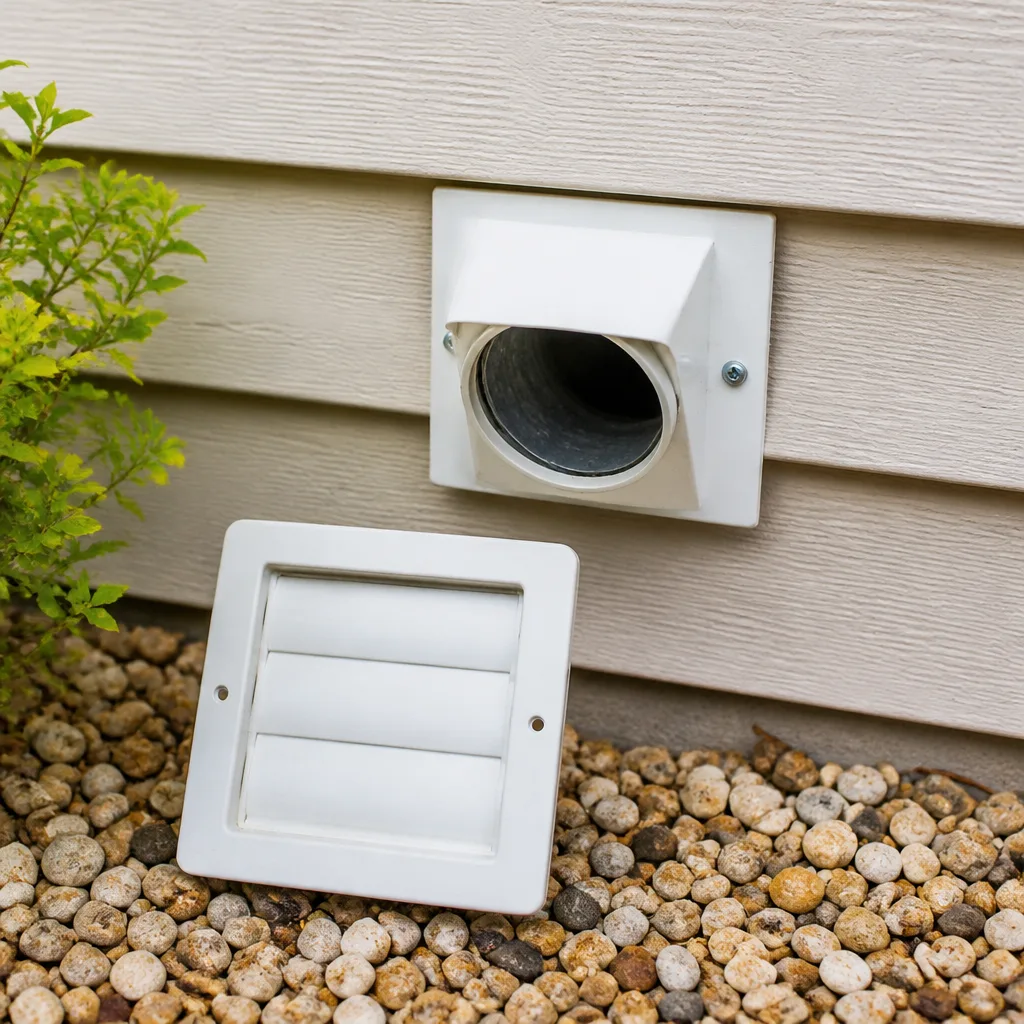 Dryer vent cleaning
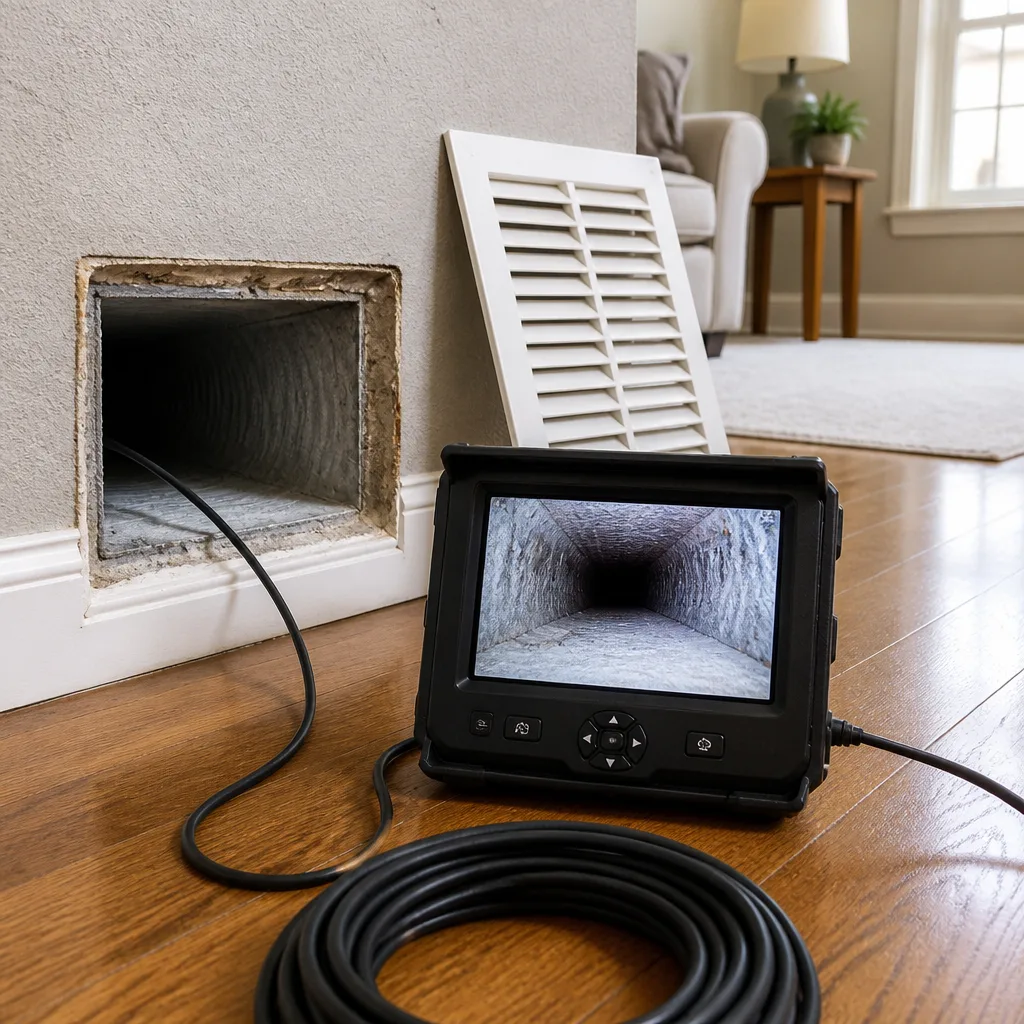 Camera inspection
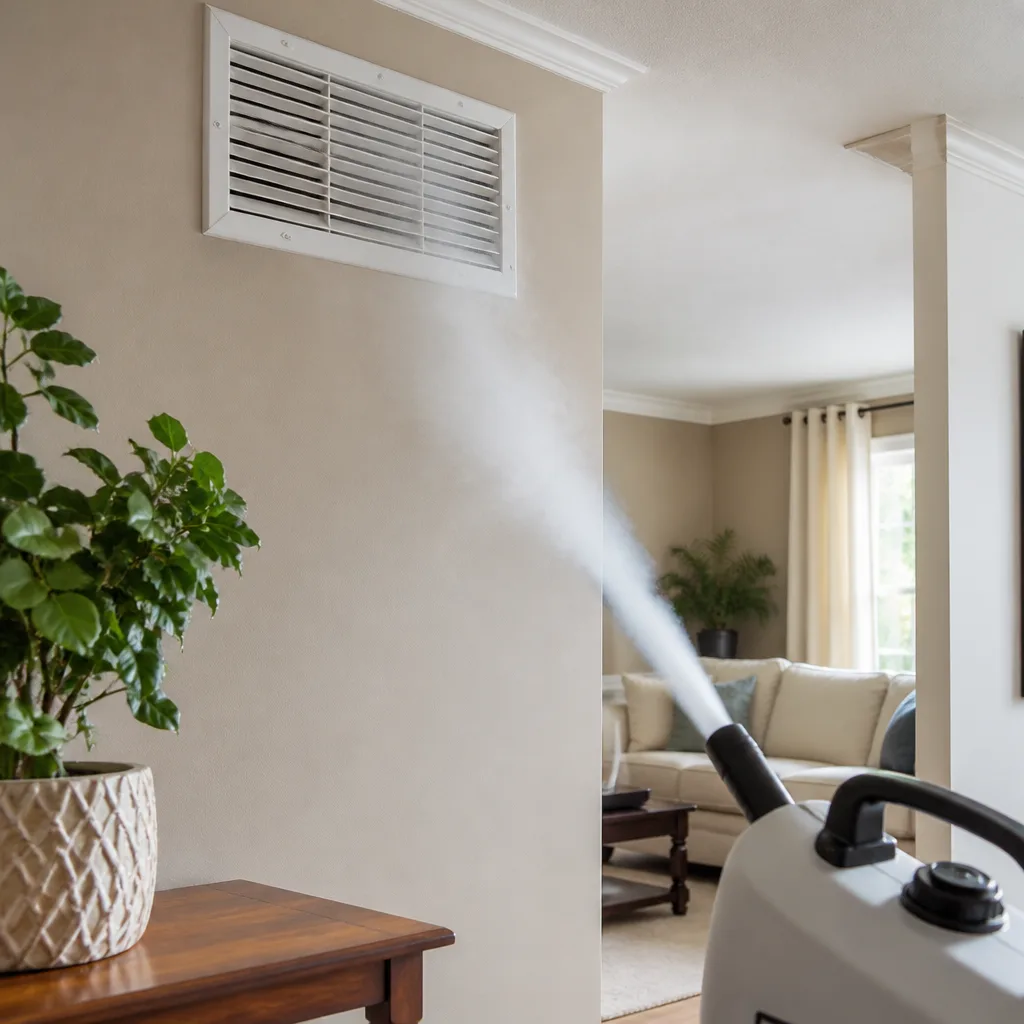 Sanitizing & deodorizing
Whole-system duct and dryer vent check with before-and-after photos - you see exactly what came out of your vents
That "$99 whole-house special" is a bait ad - the real number appears once they are in your hallway, or the "clean" is a shop-vac at the register. We photograph the inside of your ducts before and after instead.
Air Duct Cleaning Troubleshooting in Bakersfield: Common Problems and How to Fix Them
Most homeowners in Bakersfield blame the furnace or the air conditioner when the air feels weak. The equipment usually isn’t the problem. Ductwork fails quietly, behind drywall and above ceilings, and the symptoms it throws off look exactly like a failing blower motor or a dying compressor. That mismatch is why people spend money on the wrong repair and still have two cold rooms in July. This guide teaches you to read your system from the air side first. You’ll learn how to map symptoms to causes, run a basic pressure check with nothing but a dollar bill, and know when a problem needs commercial-grade equipment instead of a shop vacuum.
Quick Answer
Most duct problems in Bakersfield trace back to a handful of causes: crushed or disconnected flex duct, debris bridging inside the runs, dirty return-side components, and degraded duct liner. Diagnose from the air side before you call an HVAC technician. If airflow is weak in some rooms but strong in others, the fault is almost always in the duct path, not the equipment. A professional-grade cleaning and inspection with negative pressure containment finds the breach and confirms whether repair is needed alongside cleaning.
Styles & brands we work with
- Whole-home duct cleaning
- Dryer vent cleaning
- Camera inspection
- Sanitizing & deodorizing
Table of Contents
- Symptom-to-Cause Mapping: What Weak Airflow Is Really Telling You
- Why Bakersfield’s Dust Load Clogs Ducts Faster Than Most Climates
- Musty Smell After Cleaning: Three Different Causes, Three Different Fixes
- The Dollar Bill Test: Finding Return-Side Blockages Yourself
- When You Need Commercial-Grade Equipment (and When You Don’t)
- Duct Repair vs. Duct Cleaning: Why the Difference Matters
- Dryer Vent Blockage: The Fire Risk Most Homeowners Ignore
- How Often Ducts Really Need Attention in the San Joaquin Valley
Symptom-to-Cause Mapping: What Weak Airflow Is Really Telling You
Before you spend a dollar on parts, spend ten minutes mapping the symptom. Weak airflow in one room, weak airflow everywhere, and strong airflow with poor cooling are three different problems with three different fixes. Here’s how we break them down when we assess a system.
Weak airflow in one or two rooms only
This points to a local restriction in that branch of the system. The most common causes are a crushed flex duct (often behind drywall, in a tight attic turn, or pinched at a joist), a fully or partially closed damper, a disconnected joint, or debris packed at the boot where the duct meets the register. Years of airborne dust can bridge inside a low-lying run, and once it bridges, air can’t push past.
Weak airflow everywhere
When every register feels the same weak push, look at the shared components first: the blower itself, the filter, the return air path, or a main trunk restriction. A clogged filter starves the whole system. A collapsed return plenum does the same. Check the filter before you do anything else, because that’s the cheapest fix on the list.
Strong airflow but poor temperature
If the air is moving well but not cold (or not warm), the ductwork may be leaking in the attic or crawlspace. A disconnected joint upstream of a register can dump conditioned air into unconditioned space, which raises your energy bill and leaves the room lukewarm. This is the point where duct repair and duct cleaning part ways: cleaning alone won’t seal a breach.
The rule of thumb we apply: if the symptom is local, suspect the duct. If the symptom is global, suspect the shared components. Once you’ve narrowed it down, a professional assessment with proper equipment confirms the cause in a single visit. Our technicians have up to experience reading systems this way, and it saves homeowners the cost of replacing equipment that was fine all along. For the full scope of what we do, see our air duct cleaning service page.
Why Bakersfield’s Dust Load Clogs Ducts Faster Than Most Climates
Bakersfield sits in the southern San Joaquin Valley, and that geography has a direct effect on how fast duct systems load up. Agricultural activity surrounding the city throws fine soil and organic particulate into the air. Valley air patterns trap PM2.5 near the ground, especially during the warmer months. Add the long dry season and the dust that settles around a home, and you get a duct system that accumulates debris noticeably faster than systems in more humid or more forested climates.
What faster loading actually looks like
At the register, you’ll notice a few things before anyone measures anything:
- Dust streaks around the grille vanes, especially on return registers that pull air in
- Grit that collects on the floor or ceiling trim directly under or beside a register within days of cleaning
- Visible gray sediment at the boot when you remove a grille cover
- A thin coating on the inside of the flex duct that darkens the liner over time
- A musty or “dirty house” smell that returns within weeks of a routine surface cleaning
Why bridging happens sooner here
Bridging is the term for debris that packs tightly enough to span the inside of a duct, cutting off airflow. In a drier climate with a high particulate load, dust doesn’t just settle – it clumps against the liner walls and builds inward. Horizontal runs are the first to bridge because gravity helps the debris accumulate at the low point. In Bakersfield, that means a duct that may run clean for years elsewhere can start restricting in a much shorter window.
This is why the equipment matters. A shop vacuum pulling from the register can’t break a bridge that’s ten feet upstream. Professional-grade equipment with high static pressure and controlled negative pressure can. We use Rotobrush and Nikro platforms – the same tooling used in commercial air-quality work – precisely because local dust loads don’t respond to consumer-grade gear. If you want to understand how that load affects the whole home’s indoor air quality, our Morningstar Air Duct Cleaning team writes about it in depth.
Musty Smell After Cleaning: Three Different Causes, Three Different Fixes
If your ducts still smell musty after a professional cleaning, don’t assume the cleaning was bad. There are three likely culprits, and they don’t share a fix. Identifying which one you have is the difference between a targeted cleanup and an unplanned repair.
1. Residual biological growth on the coil or plenum
The “after” smell may be coming from a component the cleaning didn’t touch. Evaporator coils, drain pans, and the plenum surface can harbor growth if moisture has accumulated. Cleaning the ducts won’t fix a dirty drain pan or a fouled coil. The fix is to have those components cleaned or treated as part of a broader system service, and to make sure the drain is flowing correctly.
2. Dirty or degraded duct liner
Some duct systems are lined with a fibrous interior material. When it degrades (from age, moisture, or physical damage), it releases particles and holds odors that cleaning can’t fully remove. The fix in this case is often to replace the damaged section, not to clean it again. This is one of the most common things homeowners miss because the liner isn’t visible until someone inspects the interior of the run.
3. Hidden biological growth in the return stack
Return-side ducts pull air in from living spaces, and that air can carry moisture and organic particulate that settles and grows. If the return stack wasn’t part of the cleaning scope, the smell will persist. The fix is a targeted cleaning of the return path plus treatment – not a full system re-clean.
Diagnosis first, then treatment. We deploy Abatement Technologies air filtration during jobs so that particulate isn’t spread through the home while we investigate. If you have a Honeywell or Aprilaire whole-home IAQ system, the cause is sometimes the system itself: a filter that’s overdue, a humidifier pad, or a UV component that needs attention. Because we’re trained to service both systems, we can check that during the same visit rather than telling you to call someone else.
The Dollar Bill Test: Finding Return-Side Blockages Yourself
You can narrow down a return-side problem in about five minutes using a dollar bill. This is a pressure test, not a diagnostic – it won’t tell you the exact cause, but it will tell you whether the return path is doing its job, and that lets you have a much more useful conversation with a professional.
How to run it
- Turn the system on and let it run for a few minutes so airflow stabilizes.
- Hold a dollar bill flat against a supply register grille so it’s fully covering the grille face.
- Note how strongly the bill is held. On a healthy supply, the bill should stay put without you holding it against the grille.
- Move to a return register and repeat. On a healthy return, the bill should be pulled firmly into the grille.
- Compare registers room by room. A return that barely holds the bill is starved; a supply that drops the bill is throttled.
- Note where the difference is. Local restriction? Shared-component problem? The pattern tells you which.
What the result means
Weak pull at a return register means the return path is restricted. Common causes: a clogged filter, a return grille blocked by furniture or rugs, a crushed return duct, or an undersized return for the system. Weak hold at a supply register means the supply path is restricted or leaking. If every supply and every return tests weak, the problem is almost certainly at the blower, the filter, or the main trunk.
A properly designed system inside a Bakersfield home should show strong pull at the primary return and consistent hold at supply registers. If you find one room that fails both tests, that room’s branch is the problem. This is where a professional inspection pays for itself: we can pinpoint the bridge, the crush, or the disconnect with a camera and airflow readings, then confirm whether cleaning, repair, or both are required.
When You Need Commercial-Grade Equipment (and When You Don’t)
Not every duct problem requires a full commercial-grade setup. There’s a real distinction between what a targeted cleaning of one branch can resolve and what requires negative pressure containment and high-static-pressure tooling. Getting this wrong means either overspending or under-solving.
When a targeted branch cleaning is enough
- One room is weak and the cause is a single bridged run
- A register area is dusty but the rest of the system tests normal
- A single supply boot needs debris cleared
- The home has been cleaned recently and only a specific path has built up
When commercial-grade negative pressure is required
- The system shows debris in multiple branches
- There’s visible growth or odor in the return stack
- A renovation, pest, or water event has introduced material into the runs
- Airflow readings show system-wide restriction
- A breach has been identified and repair work will generate dust
The distinction matters because professional-grade equipment isn’t just stronger – it’s designed to control where the debris goes. We use Abatement Technologies air filtration on jobs where containment and capture are the standard, the same approach used in commercial remediation work. That’s not something a shop vacuum with a brush attachment can replicate, and it’s the difference between pulling debris out of the system and pushing it into the home. Rotobrush and Nikro platforms supply the high static pressure needed to break bridges and whip the liner clean across a full run.
If your system is showing signs that need the full treatment, our Bakersfield service area page explains what a full-scope job involves. Estimating is free, and the price is set per job by the written estimate before any work starts – so you know the number going in.
Duct Repair vs. Duct Cleaning: Why the Difference Matters
Cleaning a breached duct system is like washing a floor with a hole in the bucket. It looks better for a while, and then it doesn’t. Repair is a separate service from cleaning, and it addresses the silent problems that erase the value of any cleaning job.
What a breach looks like
- A disconnected joint where two sections of duct have separated
- A crushed section of flex duct (often from weight, installation error, or a dropped object in the attic)
- A tear in the liner or the outer jacket
- A failed seal at a boot, plenum, or trunk connection
- A duct that’s completely blocked by a collapsed run
Why repair is the fix, not cleaning
Clean air can’t stay clean if it’s leaving the system before it reaches a register. A breach upstream of a room dumps conditioned air into an unconditioned space, which means that room stays weak while your energy bill climbs. Cleaning past a breach doesn’t close it. The repair is the fix, and cleaning after repair is what makes the correction permanent.
This is where Morningstar Air Duct Cleaning differs from the average duct cleaner: we offer air duct repair as a dedicated service because we can actually locate and correct the breach, not just clean past it. The inspection uses airflow readings and camera confirmation to find the exact point of loss. Our technicians have up to experience with this diagnosis, and the fix is often small – one joint, one crushed section – while the result is a system that finally delivers what it was designed to deliver.
Dryer Vent Blockage: The Fire Risk Most Homeowners Ignore
Dryer vent blockage sits next to duct problems in the same house, and it’s the one that carries a fire risk. Lint accumulates in the vent line, restricts airflow, and overheats. It’s a straightforward problem with a straightforward fix, but it gets skipped far more often than it should be.
Signs your dryer vent is restricted
- Clothes take noticeably longer to dry than they used to
- The dryer itself gets hot to the touch on the cabinet or the door
- A burning or musty smell near the dryer during a cycle
- Lint visible around the outside vent flap or behind the dryer
- The outside vent flap doesn’t move much air when the dryer runs
How we treat it
Dryer vent cleaning is a dedicated fire-risk reduction service, not a discounted add-on. The line is cleared with the same care we apply to a duct run, and the exterior termination is checked to confirm airflow is restored. If the vent line is long, or routed through an attic or wall cavity with multiple turns, the restriction is often worse than it appears from the dryer side.
Bakersfield homes often have longer vent runs than the laundry area suggests, and builders sometimes route them through attic spaces. That’s where lint is most likely to accumulate and where the fire risk is highest. If you haven’t had the vent line cleared, schedule it alongside a system assessment. See our dryer vent cleaning page for the full scope.
How Often Ducts Really Need Attention in the San Joaquin Valley
There’s no universal answer, but Bakersfield’s dust load changes the math. A home here typically needs more frequent attention than a home in a wetter climate, and the specific interval depends on what’s happening in and around the house.
Factors that push the interval shorter
- Pets in the home (fur and dander load the return faster)
- Children with allergies or asthma (smaller airborne particles matter more)
- Recent renovation, pest activity, or a water event
- Nearby agricultural activity or a lot of open ground
- Frequent open windows during the dry season
- A system showing symptoms (weak airflow, odor, dust streaks)
A practical baseline
For a home with no symptoms and no pets, a routine inspection with cleaning when indicated is a reasonable baseline. For a home with allergies, pets, or active symptoms, tighten that window and treat the system like the indoor air quality component it actually is. The right trigger isn’t the calendar – it’s the symptoms and the visible evidence at the registers. If the dollar bill test is failing in one room, that room’s branch is overdue regardless of when the last cleaning happened.
Validation matters here too. Any reputable job produces before-and-after photos of your own system, plus airflow readings that confirm the correction. If a provider can’t show you your own ducts, that’s a sign to keep looking. Our full-scope approach includes Guardsman-level protective treatments as an option where the system calls for them; the treatment scope is set by the estimate, not by a script.
Common Mistakes to Avoid
- Replacing equipment before diagnosing the duct system. A weak airflow symptom looks like a failing blower, but the cause is often downstream. Get an airflow assessment first, because the equipment may be fine and the ductwork may be the problem.
- Hiring on price alone. A low teaser price that becomes a much larger invoice once the technician is on site is the industry’s signature bait-and-switch. Ask for a flat price per system agreed before work starts, with the scope in writing.
- Accepting a per-vent quote. Per-vent pricing encourages counting instead of cleaning. Whole-system flat pricing with a defined scope is the honest structure.
- Cleaning a system with a known breach. If a joint is disconnected or a run is crushed, cleaning without repair wastes the cleaning. Locate the breach, repair it, then clean.
- Ignoring the return side. Most homeowners focus on supply registers, but the return path is where dust and dander accumulate. A supply-only cleaning leaves the real load in place.
- Skipping the dryer vent. It lives next to the ducts, and it’s the one component that carries a fire risk. Treat it as fire-hazard prevention, not an add-on.
- Assuming Bakersfield dust is manageable with consumer gear. The valley’s particulate load builds bridges that a shop vacuum can’t break. Use equipment rated for the job.
See the difference
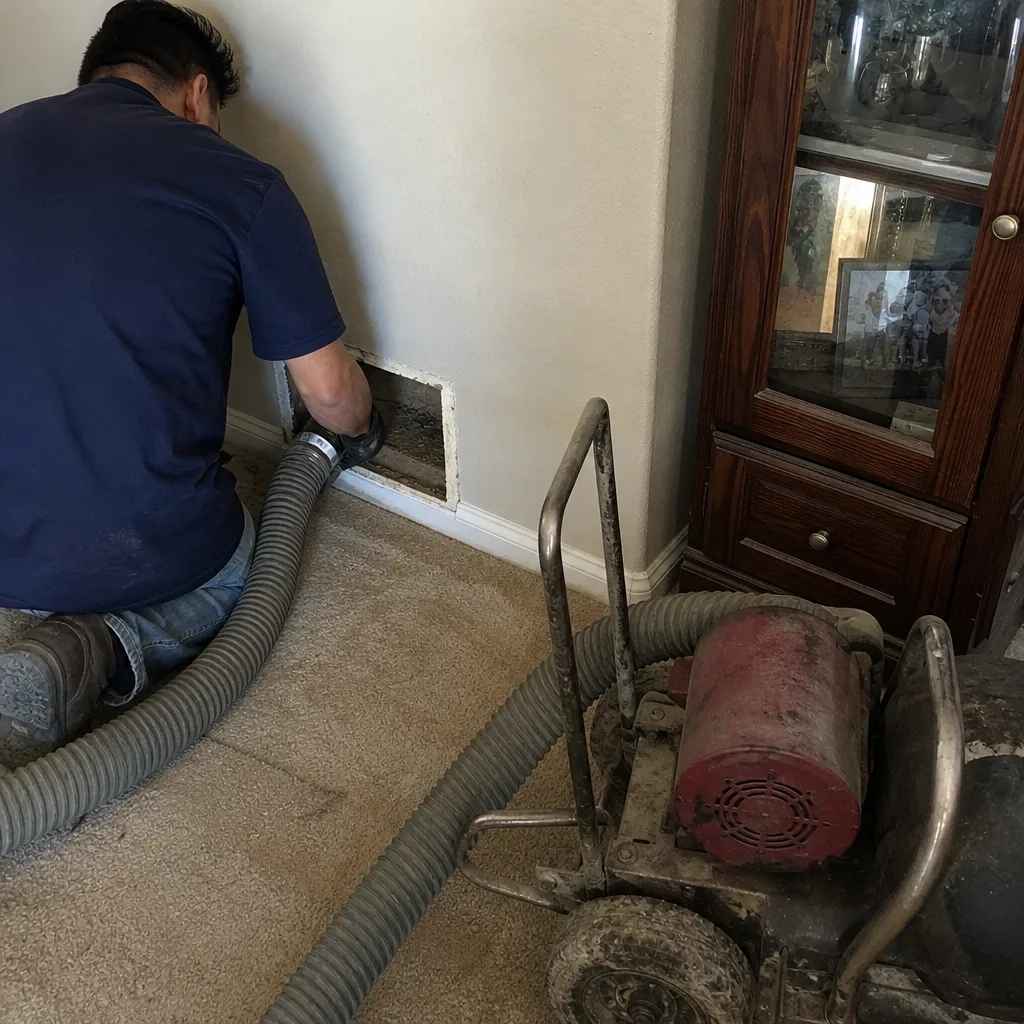 Before
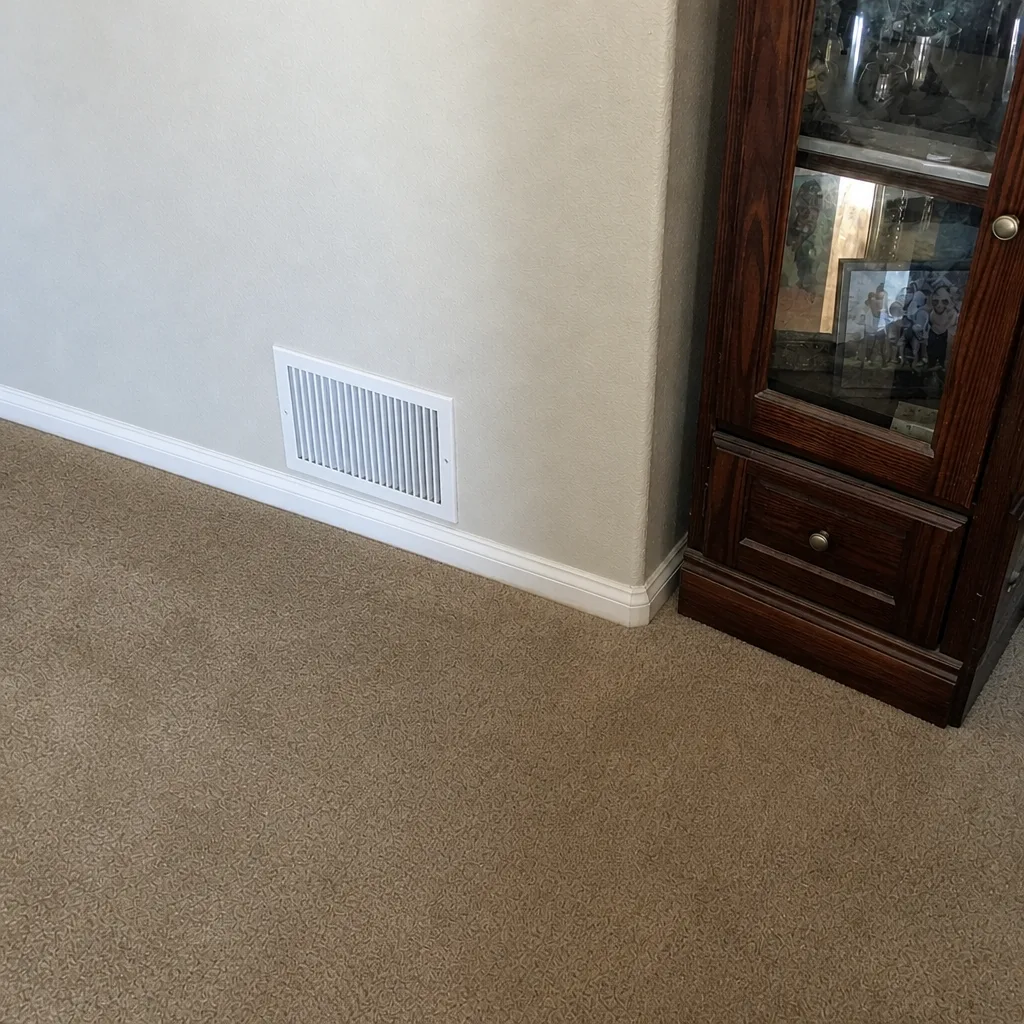 After
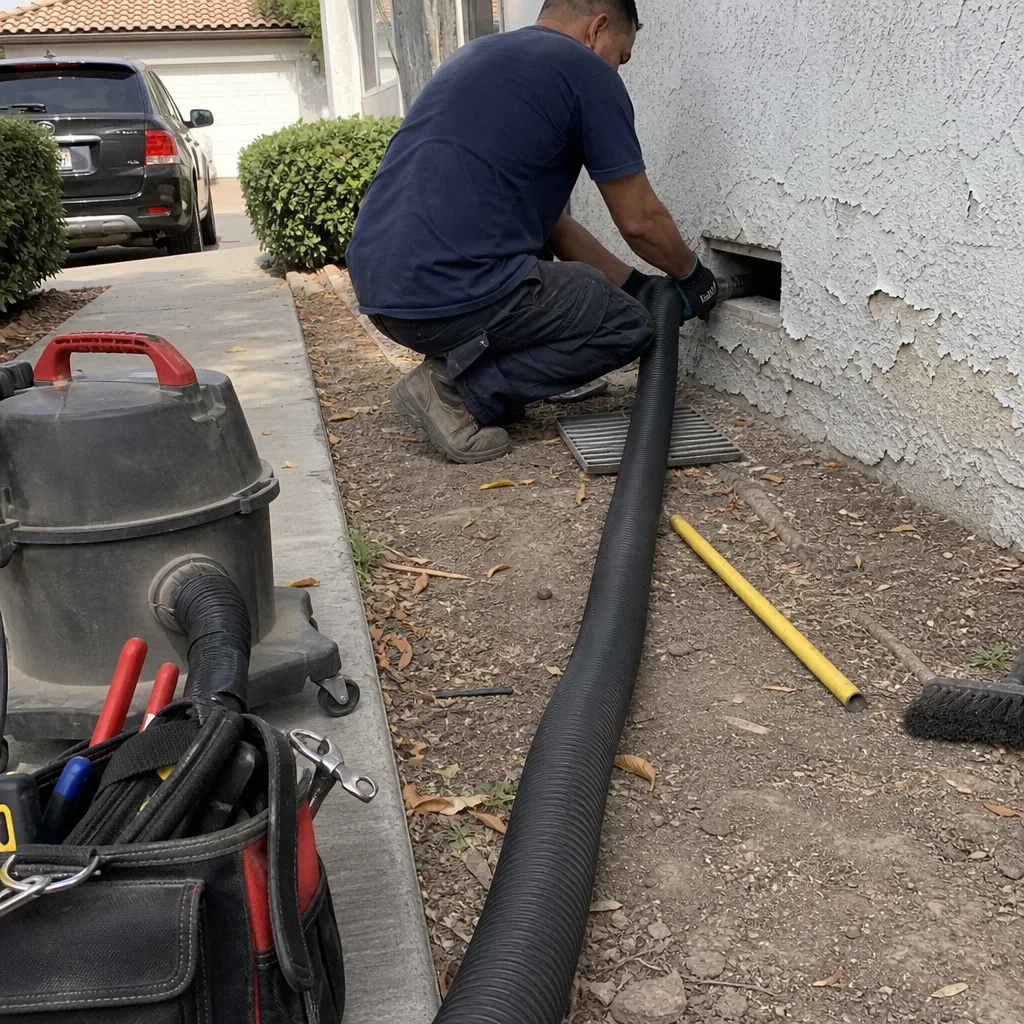 Before
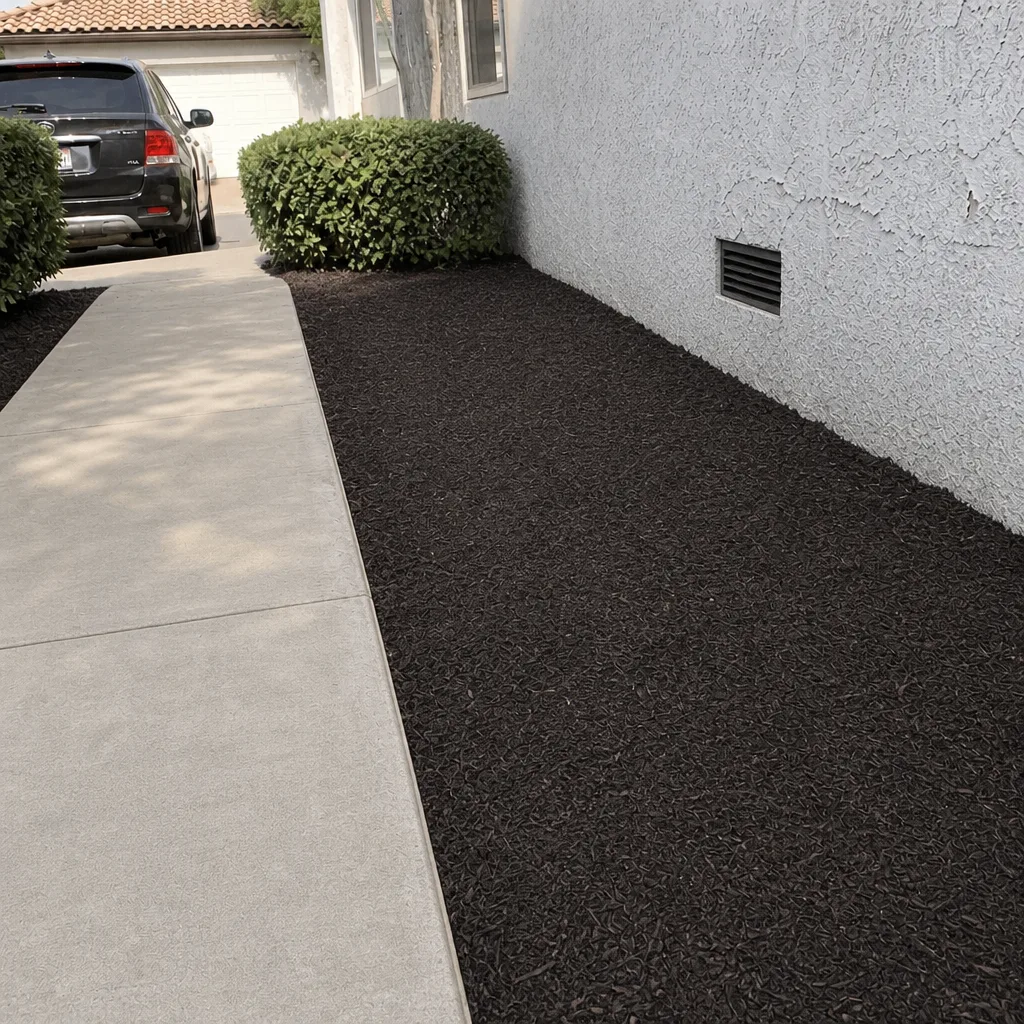 After
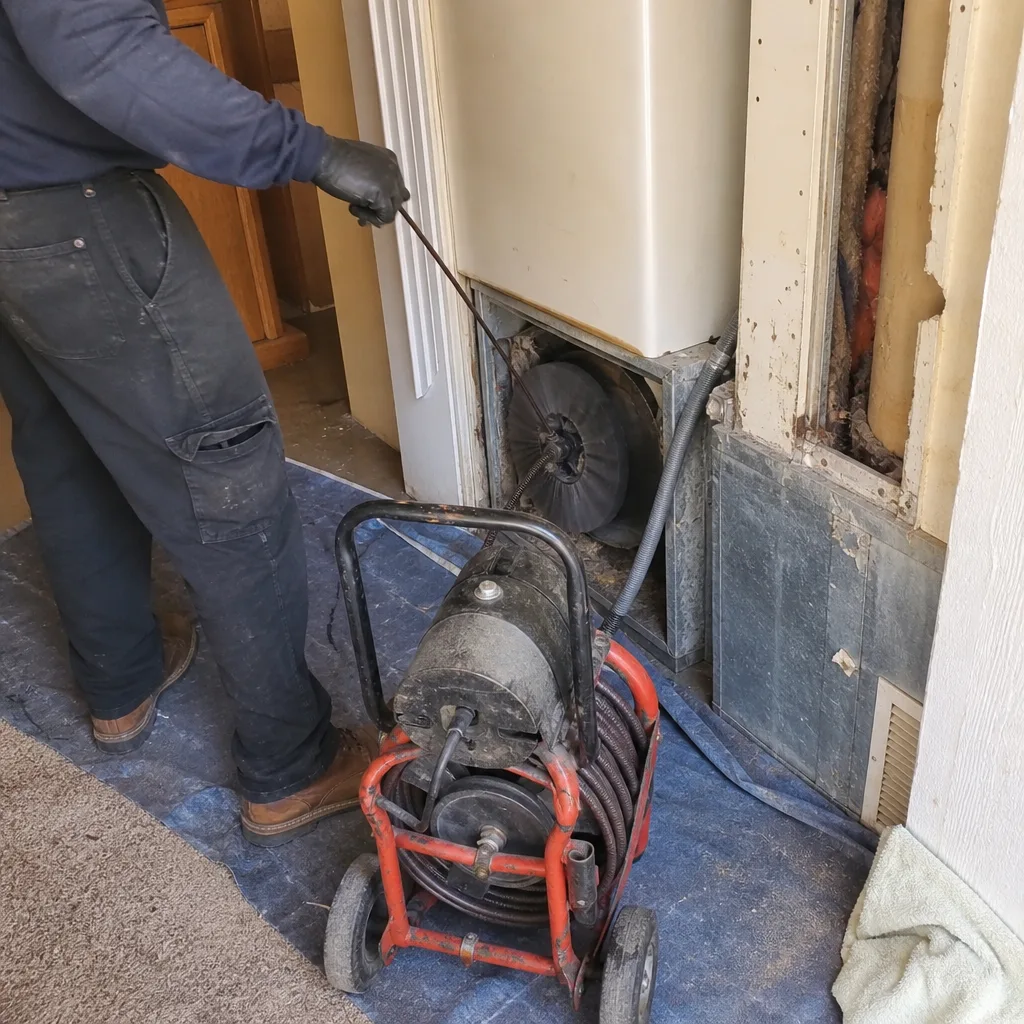 Before
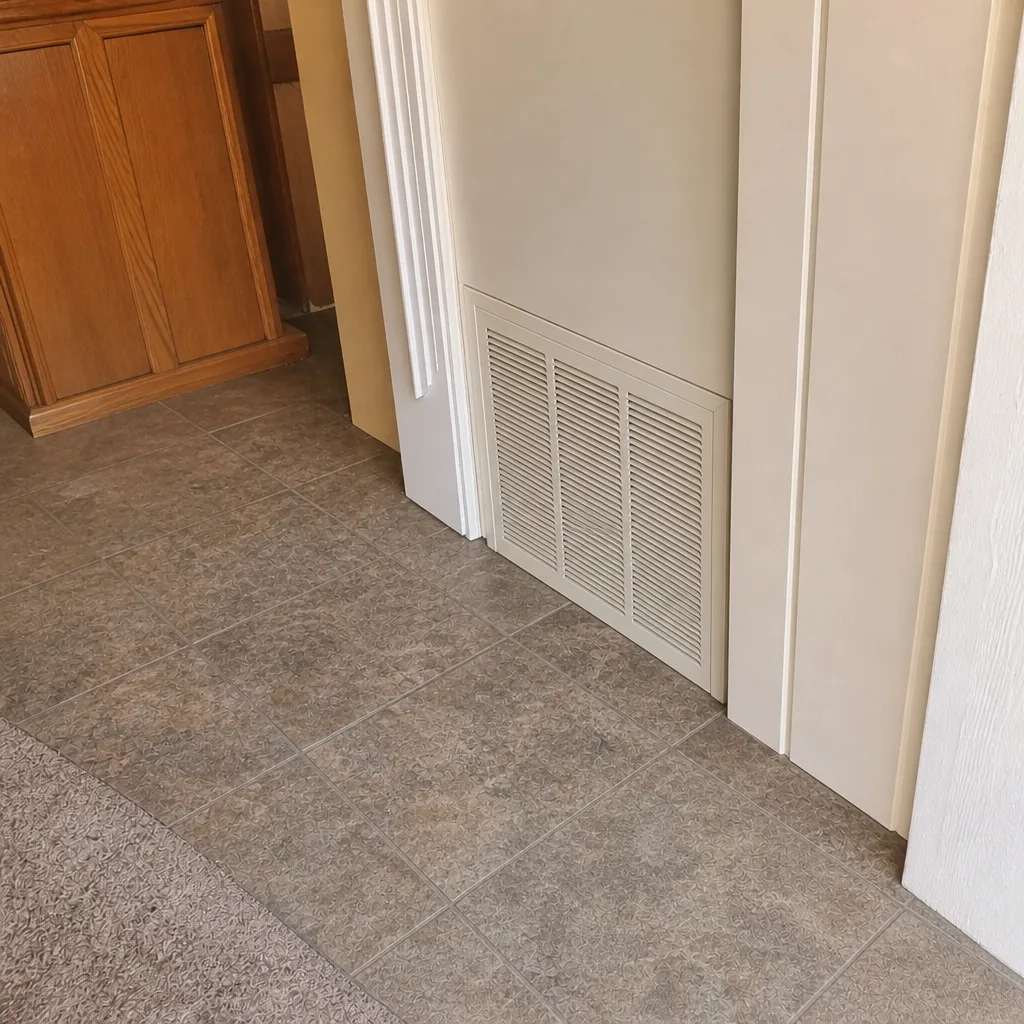 After
When to Call a Professional
Call a professional when the problem is beyond a filter change. Specifically: when the dollar bill test fails in any room; when you can see debris at a register; when a musty smell persists after cleaning; when you suspect a disconnected joint or crushed duct; when a system has had a renovation, pest, or water event; or when the dryer is running hot and taking too long. Those are the cases where airflow readings, camera confirmation, and containment-grade filtration change the outcome. Morningstar Air Duct Cleaning offers free estimates in Bakersfield – call (866) 942-8025. We answer 24/7. Fast dispatch from 7am to 7pm, Sunday through Friday. The price is set per job by the written estimate, so you’ll know the number before any work begins.
Frequently Asked Questions
Pricing depends on system size, the number of branches, and whether repair is part of the scope – so the honest answer is that a written estimate per system is the only reliable number. Call (866) 942-8025 for an exact quote, and the estimate is free. For a full scope, the estimate covers cleaning, treatment where needed, and any repair identified during inspection.
Cheap quotes usually reflect a smaller scope: a surface pass, supply registers only, or a shop vacuum that can’t break a bridge in the return. Sometimes the low number is a teaser that grows once the technician is on site. Ask what’s actually included before you compare numbers. Our written estimate sets the final price, so no surprise additions once the work is under way.
You should receive before-and-after photos of your own ducts and airflow readings from the registers. If a provider won’t show you your own system, that’s the red flag. A cleaning that can’t be documented is a claim, not a service.
There’s no universal interval. Homes here load up faster than in wetter climates because of valley dust, so the trigger is symptoms and register evidence, not the calendar. Pets, allergies, and any renovation or water event shorten the window. If you’re unsure, call (866) 942-8025 and we’ll walk through what to check.
Sometimes. If the cause is a bridged run or debris at a boot, cleaning that branch can restore airflow. If the cause is a crushed duct, a disconnected joint, or a collapsed run, cleaning won’t fix it – repair will. The inspection tells you which before you spend money.
The smell alone isn’t a diagnosis. It can come from residual growth on a coil or drain pan, degraded duct liner, or a return stack that wasn’t in the original scope. Each has a different fix and a different cost. Get the cause identified instead of cleaning the whole system again on a guess.
Yes. We’re trained to service Honeywell and Aprilaire whole-home IAQ systems, which matters because the cause of a duct problem sometimes sits in the air quality system itself. During a visit, the technician checks the system alongside the ductwork rather than treating them as separate jobs.
The Bottom Line
If your home’s airflow feels wrong, diagnose from the air side before you replace equipment. Map the symptom – local or global – and run the dollar bill test at both supply and return registers. In Bakersfield, valley dust loads systems faster than most climates, which makes bridging and return-side buildup common and makes commercial-grade equipment a genuine requirement, not a marketing line. Repair the breach before you clean. Document the work with photos. And treat dryer vent cleaning as fire-risk prevention. If you’d like a proper assessment, call (866) 942-8025 for a free estimate, with a flat price per system agreed in writing before work starts.
Written by the team at Morningstar Air Duct Cleaning.